
A practice plan that actually helps
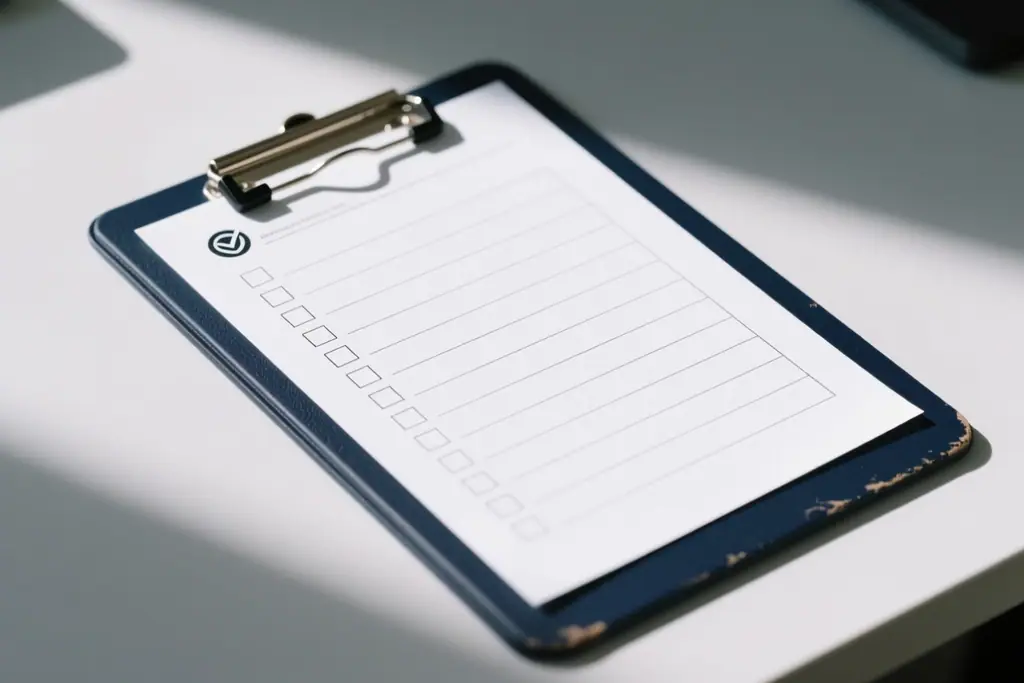
A practice plan turns demo play from idle clicking into something you can actually learn from. The point of a plan is not to find a winning method, because none exists, but to make your own behaviour predictable before money is involved. A good plan is short, specific and measurable, with a goal for each session and a habit of reviewing what happened. Progress in a random game is measured in discipline, not in profits. Each round is generated in advance and cannot be predicted, so the plan trains you, not your chances.
Why random clicking teaches nothing
Playing demo without a goal produces no learning because there is nothing to compare against. You cannot tell whether you improved if you never defined what improvement meant. The game's randomness also hides progress: a good decision can lose and a bad one can win, so outcomes alone are a poor teacher. A plan measures the decisions you control, not the results you do not. That is what makes practice meaningful.

It is worth saying plainly that a practice plan is not a route to a better outcome. The multiplier does not know how carefully you have rehearsed, and it does not reward preparation with a longer round. What preparation can change is how you act when a round goes against you, and that is a real difference. Practise the player, because the game will not be practised into changing.
Setting a goal for each session
Give every session a single, concrete goal, such as rehearsing an automatic collection level or completing a set number of rounds without changing your stake. One goal per session is easier to hold than a list. Write it down before you start so you cannot quietly move the target later. If you meet it, note what helped; if you miss it, note what got in the way. Both outcomes are useful.
Keep the goal small enough that you can actually notice whether you met it. A goal like staying calm is impossible to check, while a goal like keeping the same stake for every round is easy to confirm. The clearer the goal, the more honest the review that follows. Vague goals produce vague sessions and no learning at all.
Practising cash-out discipline
The hardest moment in a crash round is the second before you collect, when the multiplier is still climbing and holding on is tempting. Demo is the ideal place to rehearse that moment without cost. Try setting a collection level in advance and letting the game act, then notice how it feels to watch rounds pass without your hand on the button. The lesson is not to find the perfect level; it is to prove you can accept the level you set.
Keeping a simple record
A short written record does more for practice than any tool. Note the goal, the number of rounds, whether you kept your stake steady and how you felt at the end. You are not tracking wins and losses, because those are random and tell you nothing about your discipline. You are tracking whether your behaviour matched your plan. Over a few sessions, the record shows you where your rules break down.
Read the record back after a few days rather than immediately, when the details are still fresh but the emotion has faded. Patterns you could not see in the moment often appear in the notes, such as a habit of raising stakes after two losses. That is exactly the kind of insight a random game otherwise hides from you. Without the record, the same mistake simply repeats under a different mood.
Reviewing sessions honestly
Review is where the learning sticks. Read your notes and ask whether the plan held, and if not, at what point it failed. Be specific: I raised my stake after two losses is useful, while I played badly is not. Honest review often reveals one recurring weak spot, and that is the one to target next time. The aim is to make your rules automatic, so they hold even when the game is exciting.
When to move on
Move to real play when your rules feel boring rather than difficult, and when you can follow them through a run of losses. Do not set a profit target as your graduation from demo, because the game does not reward that kind of goal. Graduate on behaviour, not on results. Even then, start real play small, because real money adds pressure that demo cannot rehearse. No predictor, signal or strategy can guarantee a win.
| Session goal | What to practise | How to tell it worked |
|---|---|---|
| Steady stake | Not changing after a loss | The stake was the same at the end |
| Fixed collection | Accepting a level you set | You did not move the level |
| Round count | Stopping when you planned | You stopped on the number |
| Self-observation | Noticing rising emotion | You named it in your notes |
| Review habit | Reading back your record | You wrote a clear summary |
- One goal per session, written down before you start.
- Track behaviour, not wins and losses.
- Rehearse the moment before you collect.
- Review after each session and name one weak spot.
- Graduate on discipline, not on profit.
A practice plan works because it gives you something to improve that is actually within your control. The multiplier will do what it does, and the crash point is decided without you, so the only meaningful project is your own behaviour. Practise until your rules hold easily, then take them into real play at a small scale. Aviator is an 18+ game; keep practice honest and keep it separate from the chase.
Read next
Demo mode: what it teaches you
Practising controls, timing and the rhythm of a round without risking money.
Switching from demo to real play safely
What changes when stakes are real, and how to prepare before you deposit.
Beginner mistakes in Aviator
Chasing losses, doubling stakes and trusting “sure” signals — and what to do instead.